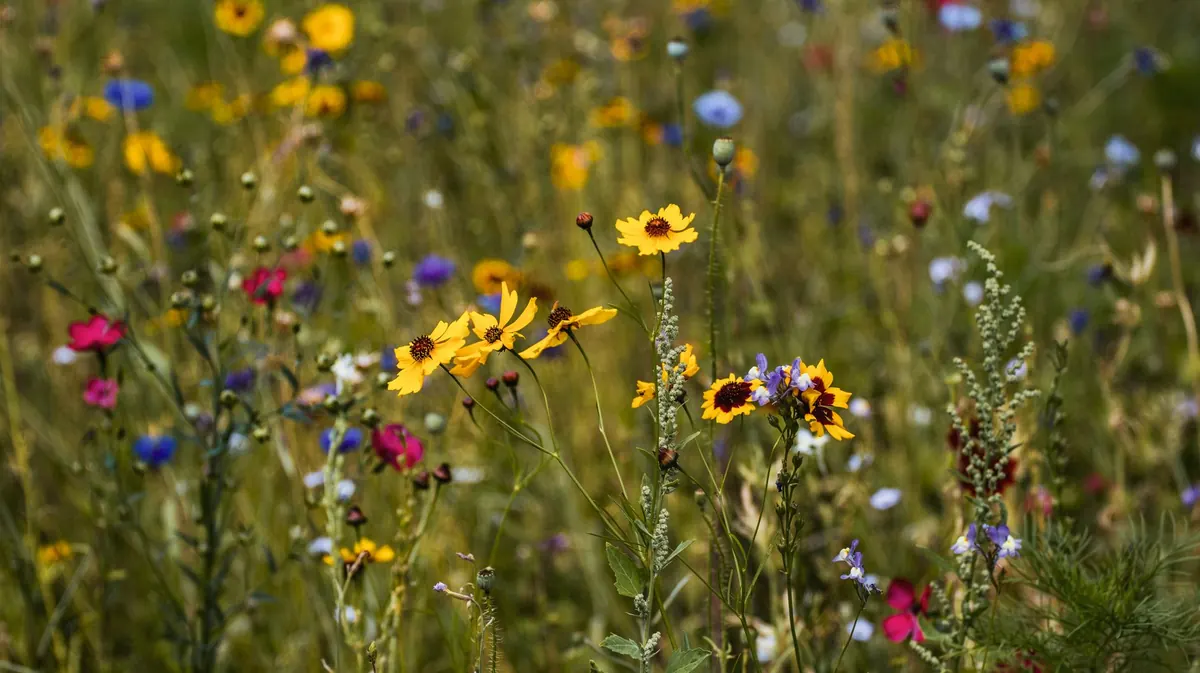
A meadow is not a patch you stop mowing and hope for the best. That route usually ends in rank grass, nettles and disappointment by July. A real meadow is a managed thing: poor soil, the right plants, and one or two well-timed cuts a year. Do the groundwork properly and the maintenance becomes genuinely light. Skip it and you will spend the next few summers pulling docks.
Start with the soil, not the seed
Fertility is the single biggest factor. Wildflowers evolved on thin, ungenerous ground where grasses could not dominate. Most garden soils are the opposite — years of feeding, mulching and mowing have left them rich. Sow a wildflower mix into that and the grass wins almost every time.
So look at your ground honestly. A tired lawn that has never been fed may be perfectly suitable. An old vegetable bed or a border that has had years of compost is a different story. You have three options: strip the topsoil away, exhaust the fertility by growing a hungry crop such as mustard and removing the growth, or accept a grassier meadow with fewer flowers. A basic soil test kit will tell you where you stand on nutrients and pH, and most meadow species are content in neutral to slightly alkaline soil.
Annual or perennial?
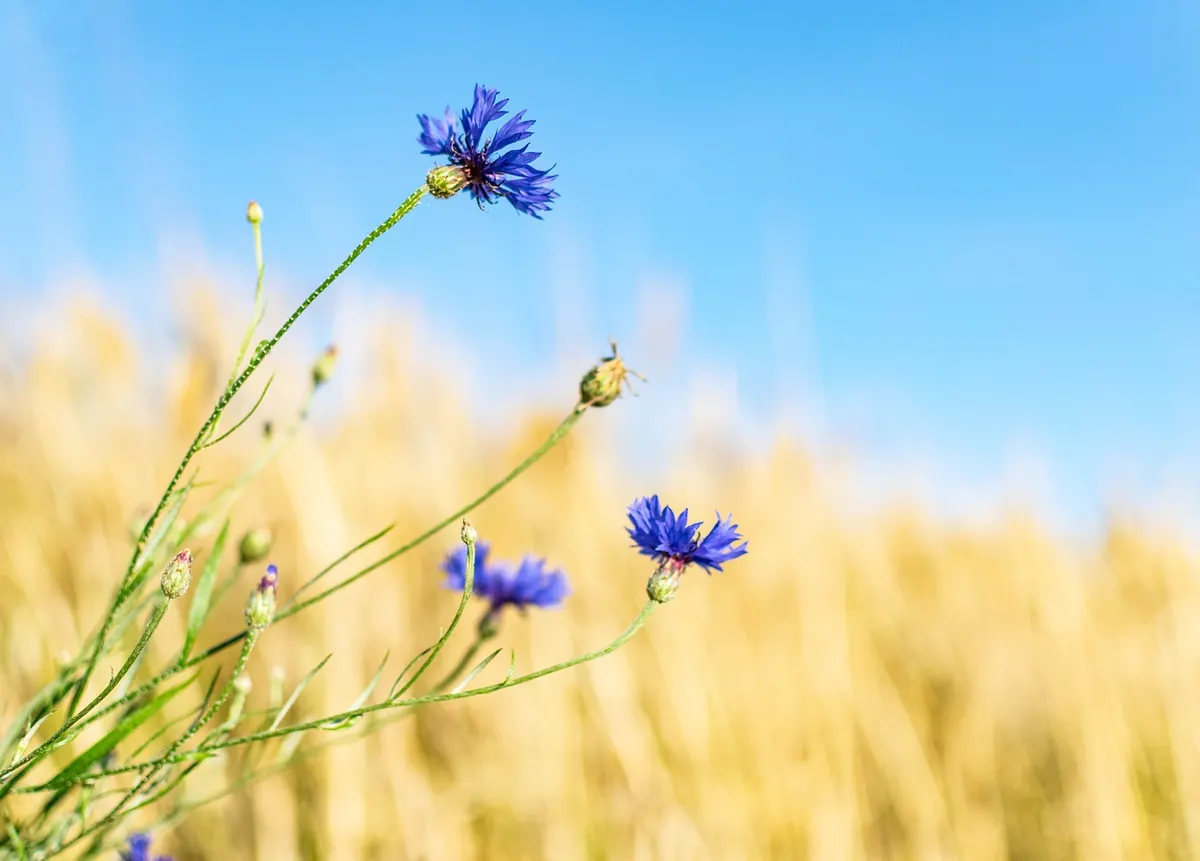
Annual mixes — poppies, cornflowers, corn marigold and their companions — are the fast fix. Sow in spring or autumn, get flowers the same summer, then cut, clear and resow. They suit small beds and anyone who wants immediate colour. Perennial meadows take two to three years to settle but then largely look after themselves: ox-eye daisy, knapweed, yarrow, meadow buttercup, birds-foot trefoil. If you want a permanent feature, go perennial and be patient.
Designing the space
Meadow in June is tall, often waist-high. Before you sow, decide where you will stand and look from. A strip of meadow in the middle of a lawn with no way in reads as neglect; the same strip with a mown path curving through it reads as deliberate.
A few principles worth following:
- Keep the shape simple. Soft curves and bays look natural; straight edges look like a neglected border. Mark curves with a hose or a length of string before you cut anything.
- Cut paths wide enough to walk — roughly a mower's width — and keep them mown all summer. They frame the planting and let you get in to weed.
- Think about scale. In a small garden a two-by-three-metre patch is plenty. In larger gardens, several separate meadows divided by mown grass look better than one big rectangle.
- Leave a transition. A mown margin around the edge softens the boundary between meadow and lawn.
Preparing the ground
This is where meadows are won and lost, and it is the least glamorous part of the job. Perennial weeds — docks, thistles, nettles, couch grass, ground elder — will not politely disappear once wildflowers appear. They will outcompete them.
- Mark out the area clearly with string or sand.
- Cut or strim existing growth as short as you can and remove the clippings.
- Either strip the turf and a few centimetres of topsoil, or clear the existing vegetation with a suitable herbicide, following the product instructions carefully.
- Wait three or four weeks and remove anything that regrows. Repeat if the weeds return strongly.
- Dig out deep-rooted perennials by hand. Every dock root left behind becomes a dock.
- Rake to a fine, firm tilth — crumbs, not clods. Tread it, rake again, and let it settle.
Autumn is the best time to sow: the soil is still warm, rain does the watering, and annual weeds are winding down. Spring sowing works too, but you will water more.
Sowing
Buy a mix suited to your soil type and situation rather than a general-purpose one. Seed rates on wildflower mixes are low — often two to five grams per square metre — so check the supplier's figure and resist the urge to sow thicker. Thick sowing gives you a dense, weak stand and more grass than flowers.
Mix the seed with dry sand or fine soil so you can see where it has gone. Divide the area into two halves and sow half the seed walking one way, then the other half walking across it. Lightly rake or tread the seed in; it needs contact with the soil, not burial. Water gently if the weather turns dry.
If your ground grows strong grass, consider adding yellow rattle. It is a native annual that parasitises grass roots and thins the sward, giving flowers room to establish. It needs a cold spell to germinate, so sow it in autumn.
Aftercare in the first year
In the first spring, resist cutting. The plants need to grow, flower and set seed. Watch for the perennials you missed and dig them out while they are small — a hand fork and ten minutes a week will save you hours later.
Once flowering finishes, usually in late summer, cut the whole area to about five to seven centimetres. Leave the cuttings for a few days so seed can drop, then rake them all off. This is the rule that matters most: never leave cuttings lying on a meadow. They feed the soil, encourage grass and smother the flowers you actually want.
Keep the area short through autumn and winter with a mower set high, and cut again in early spring if growth starts early. Annual meadows need patches of ground raked bare after cutting so seed can germinate; perennial meadows simply need the same late-summer cut every year.
Common pitfalls
- Sowing into rich, well-fed soil.
- Leaving perennial weeds in place before sowing.
- Cutting too early in the first spring.
- Leaving cuttings on the ground.
- Expecting a perennial mix to flower well in its first year — most establish quietly, then perform properly in year two or three.
Where to begin
Pick one modest patch: a strip along a fence, a corner you never use, a two-metre square of lawn. Prepare it thoroughly in late summer, sow in September or October, and leave it alone until flowering finishes next year. Get that one patch working and you will know exactly how the rest of the garden should be handled. Meadows reward patience far more than they reward effort, and that first proper summer is worth waiting for.
Photo: Julia Volk / Pexels