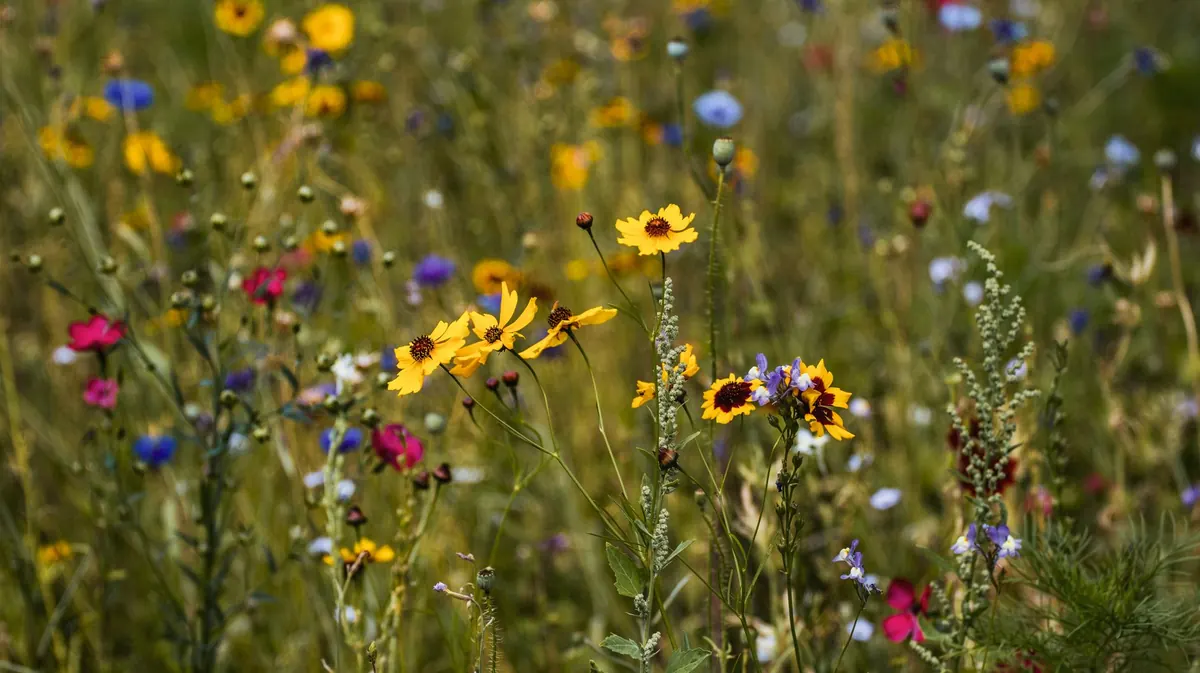
A new meadow can look wonderfully self-sufficient. Grasses and wildflowers are adapted to British weather, and once they are established they should need very little help. In the first year, though, they are not established at all. Seedlings have roots measured in millimetres, and plug plants are still learning the site. Water them badly and you can lose months of work in a week. Water them too well and you can produce a soft, shallow-rooted sward that struggles the moment you stop. The aim is deep moisture, not constant dampness.
Mistake one: watering little and often
The most common first-year error is the daily sprinkle. It feels caring. The surface darkens, the leaves glisten, and everything looks refreshed. Ten minutes later the top centimetre is already drying, while the soil below is still dust. Roots follow moisture, so they stay near the surface. That leaves young meadow plants vulnerable to a single hot afternoon and encourages moss, algae and shallow-rooted weeds.
Meadow plants need to send roots down. A deep soak followed by a period of drying does more for them than a daily mist. For newly sown seed, keep the surface moist until germination, but do it with a fine rose and a gentle hand. Once seedlings are up, change tack: water less often, but wet the soil properly.
How to soak without drowning
- Water in the early morning, when evaporation is low and leaves dry quickly.
- Aim to wet the soil to about 10–15cm, not just the surface.
- Use a trowel or your finger to check. If soil at 5cm is damp, wait.
- For plugs, water around the root ball, then let the surrounding soil dry slightly.
Mistake two: watering at the wrong time of day
Midday watering is mostly wasted. Much of it evaporates before it reaches the root zone, and strong sun can stress wet foliage. Evening watering is better for evaporation but can leave leaves and soil surface wet overnight, which suits slugs, fungal problems and damping-off in seedlings. In a damp UK summer, that overnight moisture can do more harm than good.
Early morning is the practical choice. The soil is cool, the plant is ready to transpire, and any leaf splash dries within an hour or two. If early morning is impossible, water in the late afternoon or early evening, but direct the water at the soil rather than the leaves. Avoid watering in windy conditions, when coverage becomes uneven and drift wastes water.
Mistake three: overwatering and letting water sit
Overwatering is not just too much water; it is water that stays where it is not wanted. On heavy clay, compacted ground or a shallow soil over a pan, a long soak can fill the top layer and stop draining. Roots need air as well as moisture. When the soil stays saturated, young plants yellow, wilt despite wet ground, and rot. You may also see moss, liverwort or a sour smell.
Overwatering can also change the balance of a meadow. Fertile, consistently wet conditions favour vigorous grasses and common weeds over finer wildflowers. A meadow should be lean and well drained. If you are watering the whole area to rescue a few plug plants, you are probably feeding the competition.
Signs to stop watering
- Puddles that remain for hours after watering.
- Soil that smells sour or looks green with algae.
- Seedlings that collapse even though the ground is wet.
- Lush, floppy grass while wildflowers sit still.
If drainage is the problem, stop irrigating and let the surface dry. In small areas, a garden fork can open compacted spots. On a larger site, or if water sits after rain, take local advice before carrying out major earthworks.
Mistake four: inadequate soak and runoff
Watering for two minutes and seeing a damp surface is not a soak. On slopes, sandy soil or compacted ground, sprinklers often apply water faster than the soil can absorb it. The result is runoff: water sheets across the surface, carrying seed and fine soil with it. Even on flat ground, a short burst only wets the top layer, and the roots below stay dry.
The answer is to cycle and soak. Apply water slowly, pause, then apply again. This gives the soil time to take it in.
- Water for five to ten minutes on a low setting.
- Wait twenty to thirty minutes while the moisture moves down.
- Repeat two or three times, checking with a trowel as you go.
- Stop when the soil is damp at 10–15cm, not when the surface is glossy.
Use a hose on low pressure, a soaker hose or a watering can with a fine rose. Keep the flow gentle enough that seed does not wash into hollows. Around plug plants, a shallow basin of soil can hold water over the root ball and let it sink in slowly.
Mistake five: treating seed, plugs and established plants the same
Seed and plug plants have different needs, and those needs change within the first season. Newly sown seed needs consistent surface moisture until germination. That may mean a light mist once or twice a day in dry weather, but never a flood. Once green shoots appear, reduce the frequency and start watering deeper. The young roots will follow the water down.
Plugs need a proper soak at planting and careful watering for their first few weeks. After that, they should be encouraged to root outwards. Established meadow plants, by contrast, rarely need irrigation except in a genuine drought. Continuing to water them through a normal British summer can make them dependent and weaken the sward.
Soil and weather matter too. Sandy soil drains quickly and may need smaller, more frequent soaks. Clay holds water and needs longer gaps between watering. A hot, windy week is not the same as a cool, cloudy one. Do not set a timer and forget it. Timers cannot see rain, and they cannot feel the soil. Check the root zone before every watering, and taper irrigation off as autumn arrives rather than stopping suddenly.
A simple first-year watering routine
Keep it deliberate. Twice a week, push a finger or trowel into the soil at several spots. If it is dry at 5–10cm, water in the early morning. Soak slowly, cycle if needed, and aim for moisture at 10–15cm. Then leave it alone. As seedlings and plugs grow, stretch the gaps between waterings and let the top few centimetres dry.
- Check soil before you water, not the clock.
- Water early, deeply and less often.
- Keep seed surface moist only until germination.
- Give plugs a deep start, then wean them.
- Taper off as roots deepen and autumn rain returns.
Good irrigation in a new meadow is mostly restraint. Get the first year right and you will need far less water in the years that follow.
Photo: uvlik05 / Pixabay