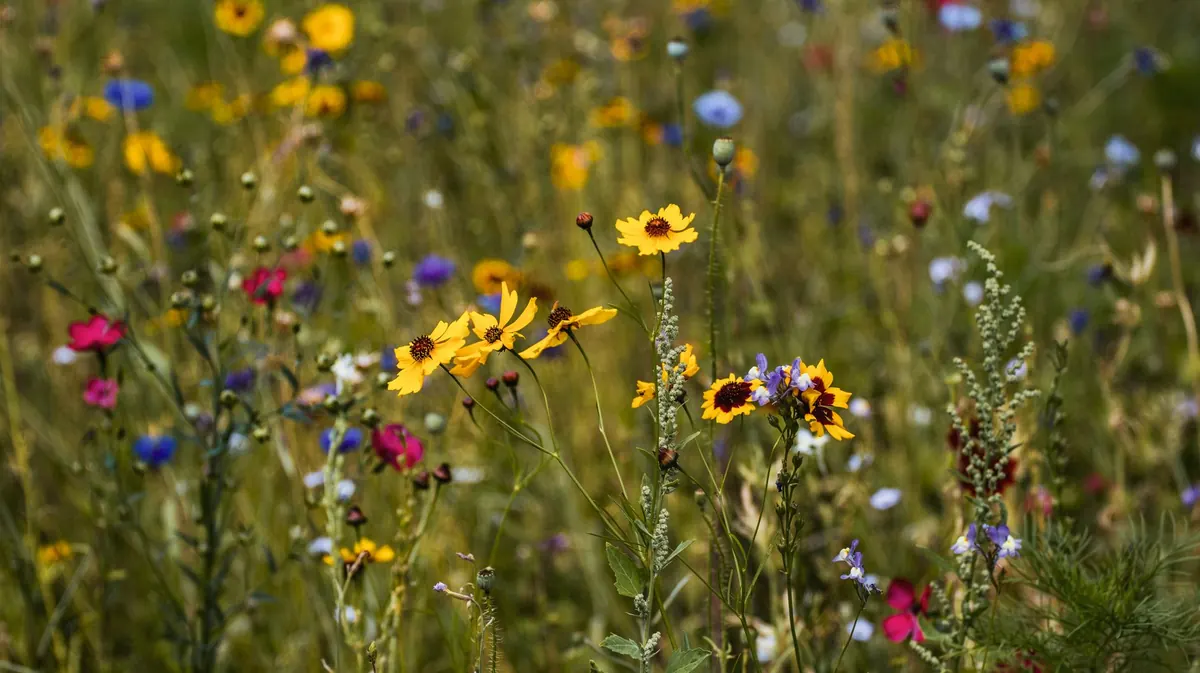
Most disappointing meadows fail for the same reason: the seed went into the wrong ground. A mix suited to chalk downland will sulk on heavy clay, and a general-purpose blend sown onto rich loam usually ends up as a thicket of grass with a few oxeye daisies gasping among it. Matching the mix to your soil — its texture, its pH and above all its fertility — decides most of what happens next.
Read your soil before you shop
Spend an hour on this and you will save a season of guesswork. Take a handful of moist soil and roll it between your palms: if it forms a long, flexible ribbon, you have clay; if it crumbles and feels gritty, you are on sand or chalk; something in between is loam. A cheap pH kit will tell you whether you are acid, neutral or alkaline, which matters more than most people expect.
Then look at what is already growing. Nettles, docks, cow parsley and rye-grass signal fertile ground that will need reducing before wildflowers can compete. Sheep's fescue, wild thyme, salad burnet and small scabious suggest thin, lime-rich ground where a chalk mix will settle in happily. Damp-loving rushes and meadowsweet tell you the ground holds water. Buying seed from a supplier who collects in your region is worth the extra effort: local provenance tends to establish more reliably than stock from a different climate.
Clay soils
Clay is nutrient-rich and slow to drain, which suits grasses rather better than flowers. The trick is to work with species that tolerate heavy ground rather than fight it. Good native choices include common knapweed, oxeye daisy, meadow buttercup, great burnet, field scabious, meadow crane's-bill, cowslip and ragged robin, with crested dog's-tail and common bent as the grasses. On wetter clay, add tufted hairgrass.
Because clay holds fertility, expect to cut and clear the growth twice in the first year or two. Removing the cuttings is not optional tidying — it is how you gradually starve the ground into a wildflower meadow.
Chalk and limestone
Thin, free-draining and alkaline, chalk is the classic downland setting and one of the easiest places to grow a species-rich meadow. Look for mixes built around kidney vetch, horseshoe vetch, salad burnet, wild thyme, lady's bedstraw, small scabious, greater knapweed and bird's-foot trefoil, with sheep's fescue, red fescue, quaking grass and meadow oat-grass carrying the structure.
Yellow rattle is particularly valuable here, where it knocks back coarse grasses and opens gaps for smaller flowers. On very shallow chalk, avoid over-sowing: light rates establish better than thick ones, and bare patches will fill in from surrounding plants.
Loam and other neutral soils
Loam is the most common garden and field soil, and often the most fertile, which makes it the trickiest starting point. Choose robust natives that can hold their own: oxeye daisy, common knapweed, meadow buttercup, field scabious, betony, selfheal, cowslip and yellow rattle, with crested dog's-tail, common bent and sweet vernal grass.
Leave competitive grasses such as Yorkshire fog and perennial rye-grass out of the mix. If the ground has been fed or grazed hard, consider taking a hay crop for a year or two first, or sowing into a stale seedbed, so the wildflowers are not swamped before they root.
Wet and seasonally flooded ground
Damp hollows, stream margins and heavy ground that sits wet through winter need a different palette entirely. Ragged robin, meadowsweet, purple loosestrife, marsh marigold, devil's-bit scabious, sneezewort and greater bird's-foot trefoil all earn their place, alongside tufted hairgrass and rushes. Devil's-bit scabious in particular is a late-summer nectar source worth the patience it demands.
Rushes spread quickly and can dominate. Cutting them in late summer and removing the arisings keeps them in check; if they are already thick, a year of repeated cutting before sowing will give your seed a fair chance.
Getting the mix right: rattle, ratios and sowing
Almost every native meadow mix is mostly grass by weight, because grass provides the structure that flowers grow through. A few practical points make the difference between a meadow and a weedy patch:
- Include yellow rattle. This native annual parasitises grass roots and is the single most useful tool for lowering grass vigour. Sow it in autumn — it needs cold to germinate — and expect it to appear properly in the second year.
- Keep the wildflower proportion honest. Blends are commonly around 80 per cent grass to 20 per cent wildflower by weight, and roughly half and half by seed count. Check the species list, not the picture on the packet.
- Sow thinly. Follow the supplier's rate, typically somewhere between 1.5 and 3 g/m² for a grass-and-wildflower mix, and higher on small, visible plots. Thin sowing gives stronger, more open plants.
- Time it for autumn. Late August to October is ideal, while the soil is warm and the rain has returned. Spring sowing works, but results are less predictable and yellow rattle rarely takes.
- Use plugs for stubborn species. Small areas and slow starters such as cowslip or betony establish far better from plug plants than from scattered seed.
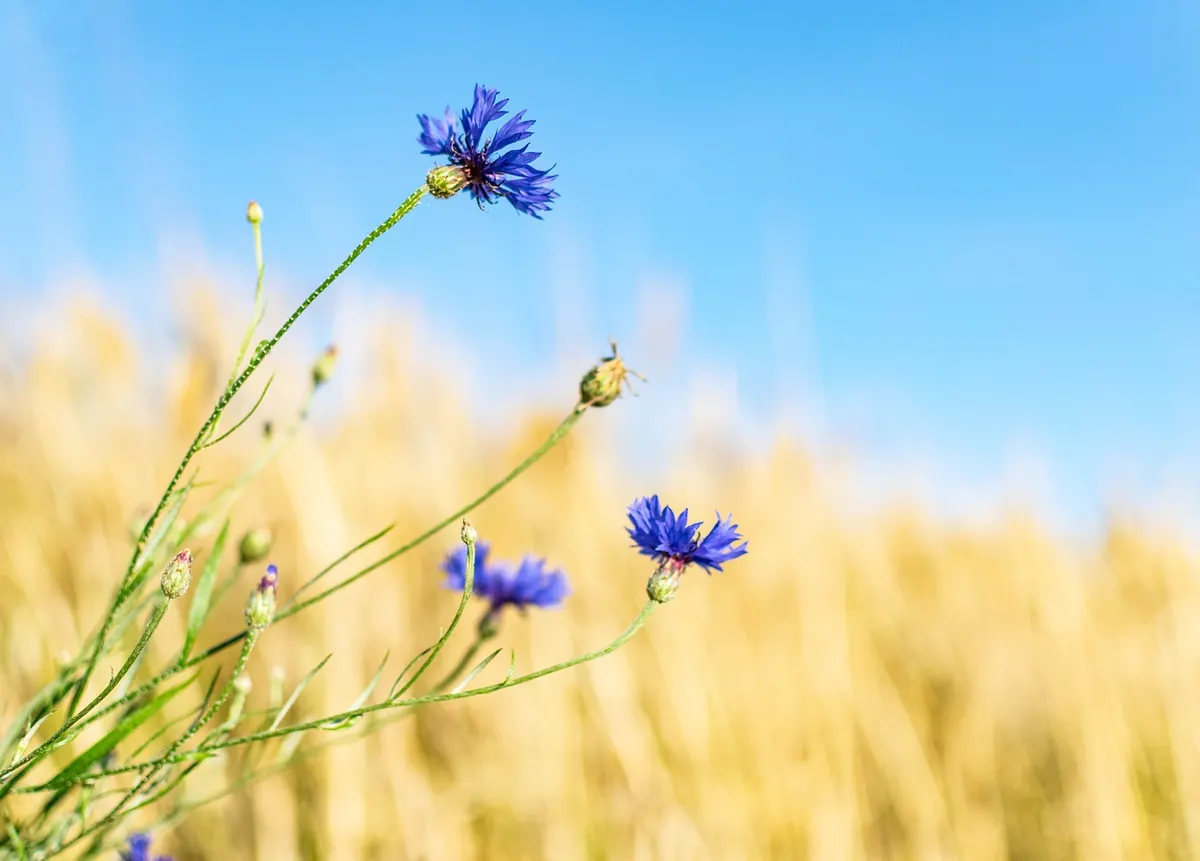
- Skip cornfield annuals unless you want one year of colour. Poppies, cornflowers and corncockle are lovely, but they are not a meadow.
Keeping it going
A meadow is a management regime, not a one-off sowing. Cut once in late summer after the flowers have set seed — usually July or August — and take the cuttings away. A second cut in autumn keeps rank growth down. If you have space, grazing with sheep or cattle in autumn does the same job with less labour.
Never leave cut material lying on the ground. Every year you remove it, fertility falls slightly and diversity rises; every year you leave it, the grasses get stronger and the flowers thinner. Give a new meadow three years before judging it, and top up with plugs where bare ground persists.
Photo: Alexas_Fotos / Pixabay