Standing over a bare patch of ground with a tin of seed in one hand and a tray of plugs in the other is a familiar moment for anyone starting a meadow. Both routes work. Which one suits you comes down to how much ground you are covering, how weedy the soil is, what you are willing to spend, and how patient you are prepared to be. There is no single right answer, but there are some reliable rules of thumb that save a great deal of disappointment.
What each method actually involves
Sowing is the broad-brush approach. You prepare a clean, low-fertility seedbed, broadcast the mix by hand or with a small spreader, rake it in lightly and firm the surface so the seed makes contact with the soil. Most UK meadow mixes combine native grasses with wildflowers, and the grass is not filler — it is the structure that holds the flowers up and keeps weeds out.
Plug planting is closer to gardening. You buy small plants raised in modules, clear a pocket of ground for each one, and tuck them in by hand. Each plant arrives with an established root system, so it starts growing immediately rather than waiting for the right combination of moisture and warmth to germinate.
The preparation is the same either way
This is the part people skip, and it is the reason most meadows fail. Both methods need low soil fertility and reduced competition. If you are converting lawn, that usually means removing the top growth, scarifying or stripping turf, and giving the ground a season to settle. If the soil is rich — an old vegetable bed, for example — you may need to strip topsoil or grow a few crops of something hungry to bring fertility down before sowing. Seed scattered onto existing grass rarely becomes a meadow. It becomes a slightly different lawn.
Cost: where the money really goes
Seed is far cheaper per square metre. A small tin goes a long way, and for anything larger than a modest garden, seed is the only realistic option. Plugs cost considerably more per plant, and you need a surprising number of them to fill a meadow — suppliers' planting densities vary, so follow the guidance on the tray rather than guessing.
The honest comparison is not seed versus plugs, it is seed plus two seasons of careful management versus plugs plus a lot of hand-weeding. Plugs are worth the outlay on small areas: a front garden, a border, a 10 m² patch where you want visible results and can keep an eye on every plant. On a paddock or a large verge, the arithmetic settles it quickly.
Whichever you choose, buy seed and plugs of UK native provenance, ideally from a supplier who can tell you where the stock originated. Cheap mixes are often heavy on agricultural grasses or include species that do not belong in a British meadow.
Success rates: an honest look at weeds and weather
Seed germination depends on moisture, temperature, seed-to-soil contact and, above all, competition. A dry fortnight after sowing can wipe out a spring attempt. Slugs and birds take their share. Seed washed into a hollow will germinate in a clump and nowhere else. Yellow rattle, the plant that does more than any other to weaken vigorous grass, needs autumn sowing and a grass host to latch onto, and it will not establish if you sow it into a tidy, empty seedbed.
Plugs dodge most of this. They are big enough to survive a dry spell, you can see exactly where they are, and you can weed around them. They also cope with slightly weedier ground, since you can clear a generous circle around each plant and keep it clear through the first summer.
Plugs suit:
- Small areas where you want a guaranteed result in the first year
- Ground that still has some weed pressure you cannot fully clear
- Sloping or uneven sites where seed would wash away
- Adding particular species to an existing meadow, such as knapweed, scabious or betony
- Gardens where the meadow is a feature border rather than a field
Seed suits larger areas, tighter budgets, and sites where you can prepare the ground properly and then leave it alone. Patience is part of the package: a sown meadow often looks thin in its first summer and only starts to feel like a meadow in its second or third year.
Timing
For most perennial wildflower and grass mixes, late August to mid-October is the sweet spot. The soil is still warm, autumn rain is usually on the way, and the seed gets a natural cold period over winter that many species need before they will germinate. Spring sowing works, but you will be watering it and hoping for a damp May.
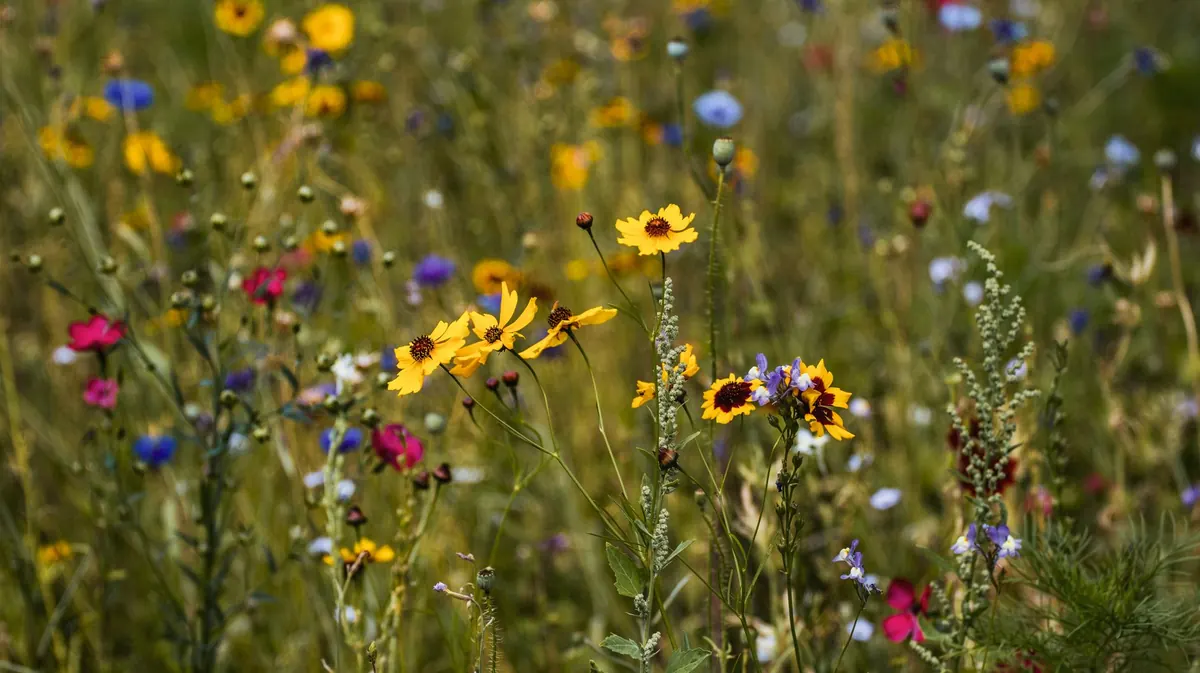
Cornfield annuals are the exception. A mix of cornflowers, poppies, corn marigold and corncockle sown in spring will flower that same summer, and it is a good way to get colour while perennials are still finding their feet.
Plugs are best planted in April or May once hard frosts have passed, or in early September while the soil is still warm. Water them in, keep them watered for the first few weeks if the weather turns dry, and avoid planting in the middle of summer unless you can commit to a watering can.
Maintenance in the first two years
Both methods need the same discipline afterwards, and this is where meadows are won or lost. In the first year, cut regularly — roughly every six to eight weeks — to stop annual weeds setting seed and to let light down to the young plants. Take the cuttings away. Leaving them to rot feeds the soil and encourages exactly the coarse, thuggish growth you are trying to avoid.
With plugs, the first summer is mostly about hand-weeding between plants. With seed, it is about mowing around whatever germinates and resisting the urge to fill gaps with more seed. From the second year, move to a traditional hay-cut regime: one main cut in late summer after the flowers have set seed, and remove the arisings. A light grazing or a second cut in autumn keeps the sward open.
Getting the best of both
You do not have to pick a side. A common and effective approach is to sow the bulk of the area with a native seed mix for structure and coverage, then plant plugs of the species you care most about in the places you will actually see them — along a path, around a seating area, against a hedge. It costs less than plugging the whole meadow and looks better than seed alone in the first year.
Whatever you choose, spend your effort on preparation and aftercare rather than on shopping. Clear the ground properly, keep fertility low, cut and clear the cuttings, and give it three growing seasons before you judge the result. A meadow is a slow project, and the gardens that succeed with one are almost always the ones that were prepared to wait.
Photo: ValeriaLu / Pixabay