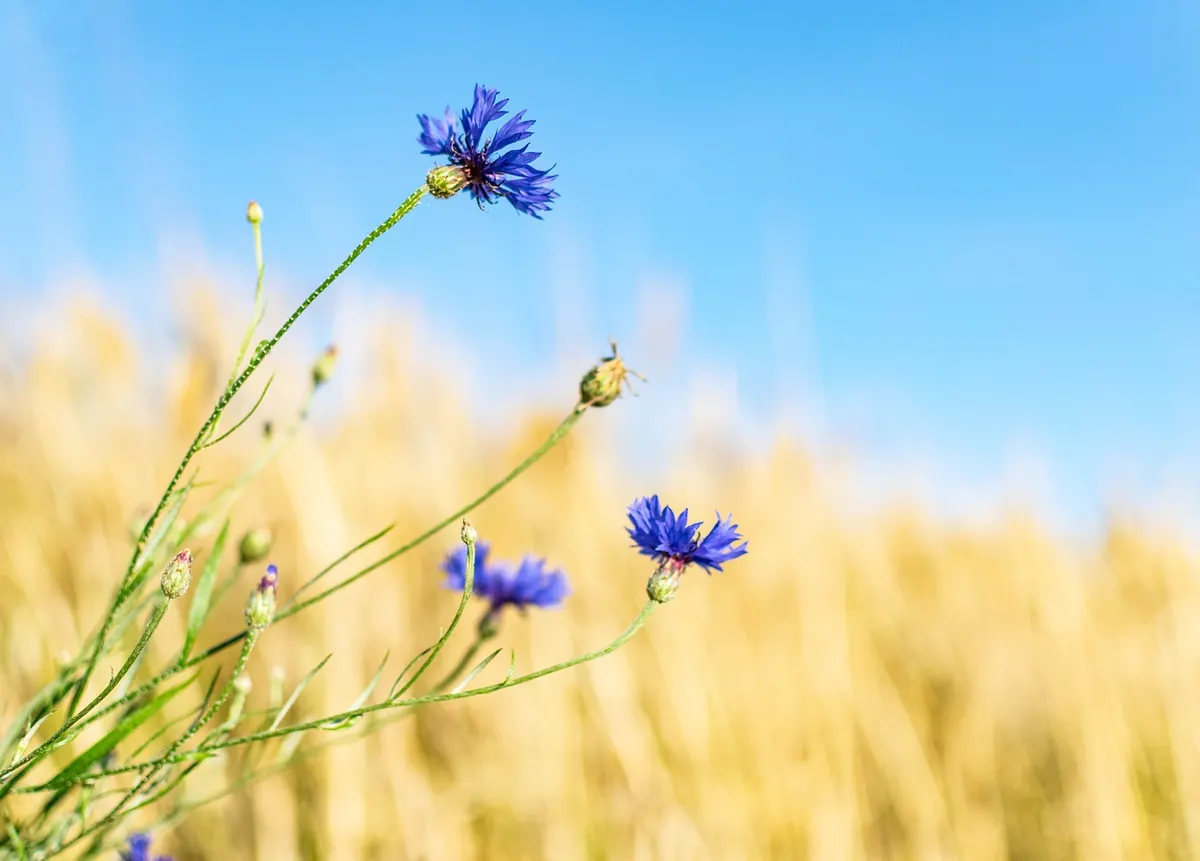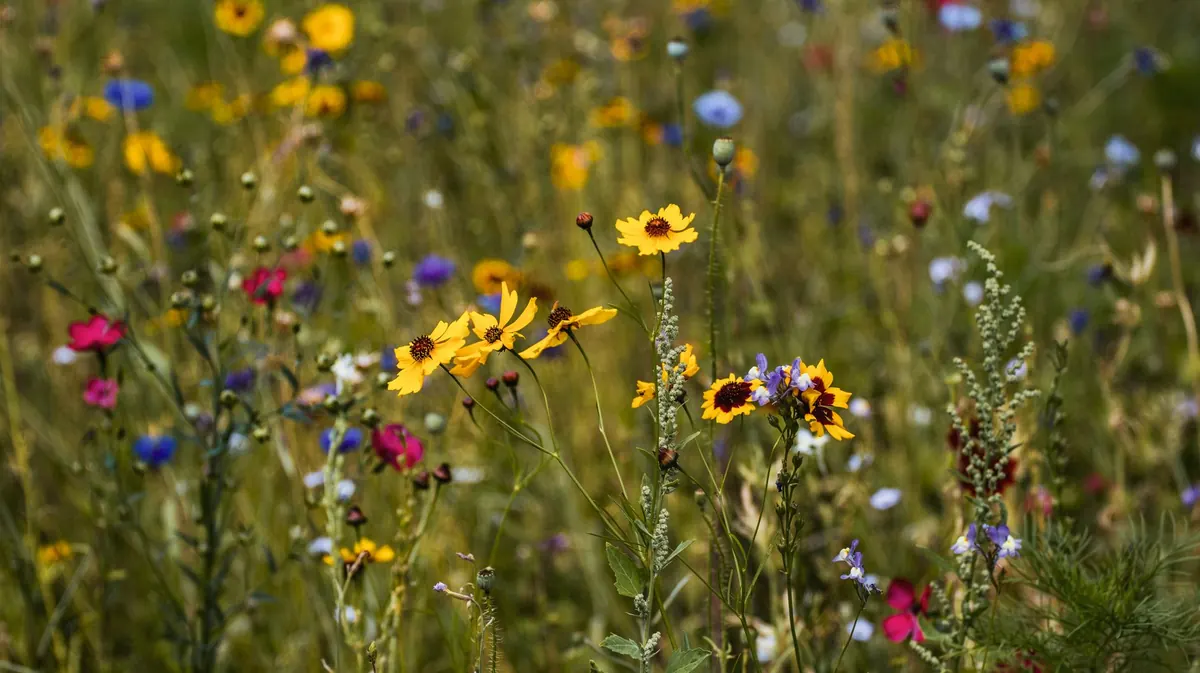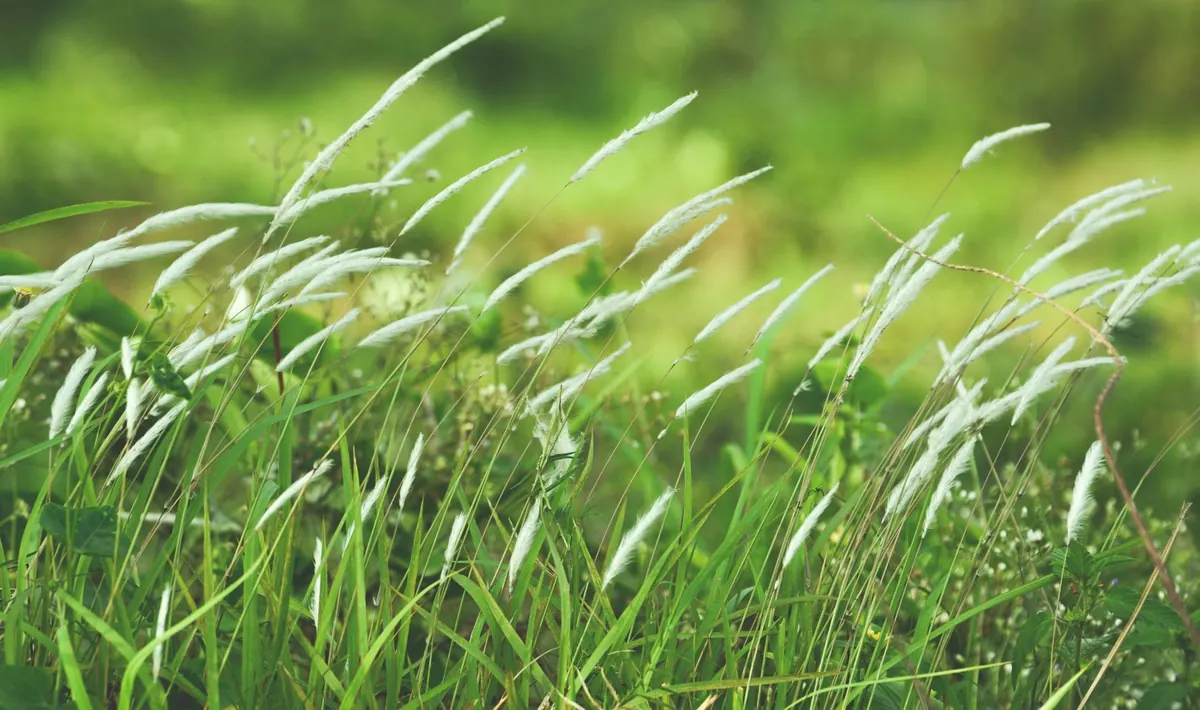
Stand at the edge of two fields in late June and the difference is audible as well as visible. One hums with bees, moves in the breeze at a dozen different heights, and shows you something new every few paces. The other is bright, flat green and cropped close as a lawn, and it is largely silent. Most of that difference comes down to grass — not the presence of it, but the kind.
What we mean by fine grasses
In a UK meadow context, "fine grasses" usually means the native, relatively slow-growing, low-fertility species that evolved here alongside our wildflowers: common bent, creeping red fescue, sheep's fescue, crested dog's-tail, sweet vernal grass, quaking grass, yellow oat-grass, meadow foxtail, timothy and their relatives.
They share useful habits. Their blades are narrow, their growth is tufted or loosely spreading rather than matted, and they cope with poor soil. Because they don't demand nitrogen, they don't race away with it. That matters enormously for everything planted beside them.
Why agricultural ryegrass causes problems
Perennial ryegrass and Italian ryegrass are remarkable plants. Generations of breeding have made them fast to establish, high-yielding, sugar-rich and tolerant of heavy grazing and repeated cutting — exactly what a livestock farm needs. On a grazing platform, ryegrass is a sensible choice.
In a meadow, those same strengths become liabilities:
- It closes the canopy. Dense, uniform growth blocks light at ground level, and small wildflowers simply don't get a look in.
- It hoovers up nutrients. Ryegrass responds to fertility by growing harder, which pushes the balance further in its favour and against slower native species.
- It offers little structure. A tight sward has few tussocks, hollow stems or standing dead material, so there are fewer places for invertebrates to shelter, overwinter or nest.
- It flowers and finishes early. One heavy flush of growth, then very little of interest for the rest of the season.
- It persists. It self-seeds, spreads from tillers, and once established in a meadow it can hold on for years.
None of this makes ryegrass a villain. It makes it the wrong plant for the job when the job is habitat.
The ecological case for diversity
A meadow works because its plants do different things at different times. Fine grasses are central to that, and not just as a backdrop for wildflowers.
Because they flower across a long window — sweet vernal grass early, crested dog's-tail and the fescues later — they keep supplying pollen and cover when other species have finished. Their tussocks and seed heads provide nesting material and winter shelter for bumblebees, moths and beetles. Their seeds feed finches and other farmland birds through late summer and autumn. Their varied roots, some shallow and fibrous, some deeper, build soil structure, improve water infiltration and support the fungi that help plants feed themselves.
Diversity also buys resilience. A sward with a spread of native grasses handles drought, waterlogging and late frosts far better than a monoculture, because different species fail and recover at different rates.
Telling them apart in the field
You don't need to be a botanist, but you do need to get on your knees. A few things to look at:
- Leaf shape. Ryegrass blades are broad, glossy and dark green, with a distinct keel and a V-shaped fold when you look at the shoot from above. Fine grass blades are narrow, often duller, and may be rolled rather than folded.
- Growth habit. Ryegrass forms a tight, even mat. Fescues grow in distinct tufts; bents creep with fine, wiry stems above ground.
- Flower heads. Ryegrass has a simple, unbranched spike with spikelets lying flat against the stem. Most fine grasses have open, branching panicles — crested dog's-tail is unmistakable with its one-sided, comb-like head.
- Base colour. Ryegrass tillers are often reddish-purple at the base, which shows clearly in late summer.
If you're unsure, take a handful of tillers with the leaf base and flower head intact and ask your local Wildlife Trust, a county recording group or a nearby meadow project. A second opinion saves a lot of guesswork.
Read the seed label before you sow
Plenty of mixes sold as "wildflower meadow" or "amenity" seed contain ryegrass, often as a nurse crop and usually as the largest component by weight. Grasses are heavier than wildflower seeds, so a mix that reads 80 per cent grass may be mostly ryegrass by volume. Look for named native species, a stated UK provenance, and no agricultural ryegrass or clover unless you specifically want a short-term nurse crop. Cheaper is rarely better here.
Shifting a ryegrass sward towards fine grasses
Conversion is a slow job, and there are no shortcuts worth taking. What works is consistent management over several seasons.
- Stop feeding it. No fertiliser, no muck, no slurry, no nutrient-rich runoff. Fertility is ryegrass's best friend.
- Cut and remove. Two or three cuts a year, always taking the arisings away. Every removal is a small withdrawal from the nutrient bank.
- Open the sward. Light scarifying or chain harrowing in early autumn creates gaps for seed to land in and weakens the mat.
- Introduce yellow rattle. This native annual parasitises grass roots and is one of the most effective tools for tilting the balance away from vigorous grasses. Sow into scarified patches in autumn and let it set seed.
- Overseed with native fine grasses and locally appropriate wildflowers. Autumn or early spring, into gaps, then firm the ground back down.
- Manage for the long term. A hay cut in late July or August, arisings removed, followed by light aftermath grazing. Avoid grazing through midsummer.
Give it three to five years, and expect the composition to keep changing after that. Where ryegrass is deeply dominant, you may need a run of repeated cuts or a short break crop to exhaust it, but keep any cultivation shallow and gentle — disturbing soil simply gives the aggressive species another chance.
Start small and read your ground
Pick the worst quarter of a field rather than the whole thing. Watch what's already there: a few fine grasses hanging on, or a patch of knapweed or bird's-foot trefoil, tells you the site can support more given the right management. Cut, remove, scarify, sow, and above all be patient. A meadow isn't built in a season, and the fine grasses are the ones that will still be holding it together in twenty years' time.