Renting and gardening can feel like a contradiction. You want to plant something, but you also know the landlord's deposit scheme, the six-month break clause and the fact that you may not be here next spring. A meadow in containers solves most of that. You keep the soil intact, you keep the lawn intact, and when the van arrives, the meadow goes in with the houseplants.
Why Containers Suit a Rented Garden
The obvious benefit is that you leave no trace. Nothing is dug, no lawn is stripped, no fence post goes into a wall. If you move out mid-season, you are not leaving behind a half-finished project for somebody else to judge. And because containers warm up faster than open ground, a small potted meadow can be flowering weeks ahead of a border sown at the same time.
Containers also let you be precise. A meadow in a raised bed needs the right soil, the right drainage and the right light. A forty-litre pot you can move to a sunnier corner while you work out what the garden actually does. Most tenancy agreements are relaxed about pots on a patio; check yours anyway, and keep anything off shared paths where it might block access.
Choose the Spot Before You Choose the Pot
Wildflower seed wants sun — six hours or more in summer if you can find it. Watch the garden at different times of day for a week or so. A corner that looks bright at lunchtime may sit in shadow by four o'clock.
If your garden is north-facing or heavily shaded, a balcony, a sunny windowsill or a front step may be the better site. Don't fight deep shade; you will end up with leggy green growth and no flowers. Also think about wind: tall cornflowers and ox-eye daisies in a lightweight pot on a breezy balcony will flop. A sheltered corner and a heavier pot help.
Pots, Compost and Drainage
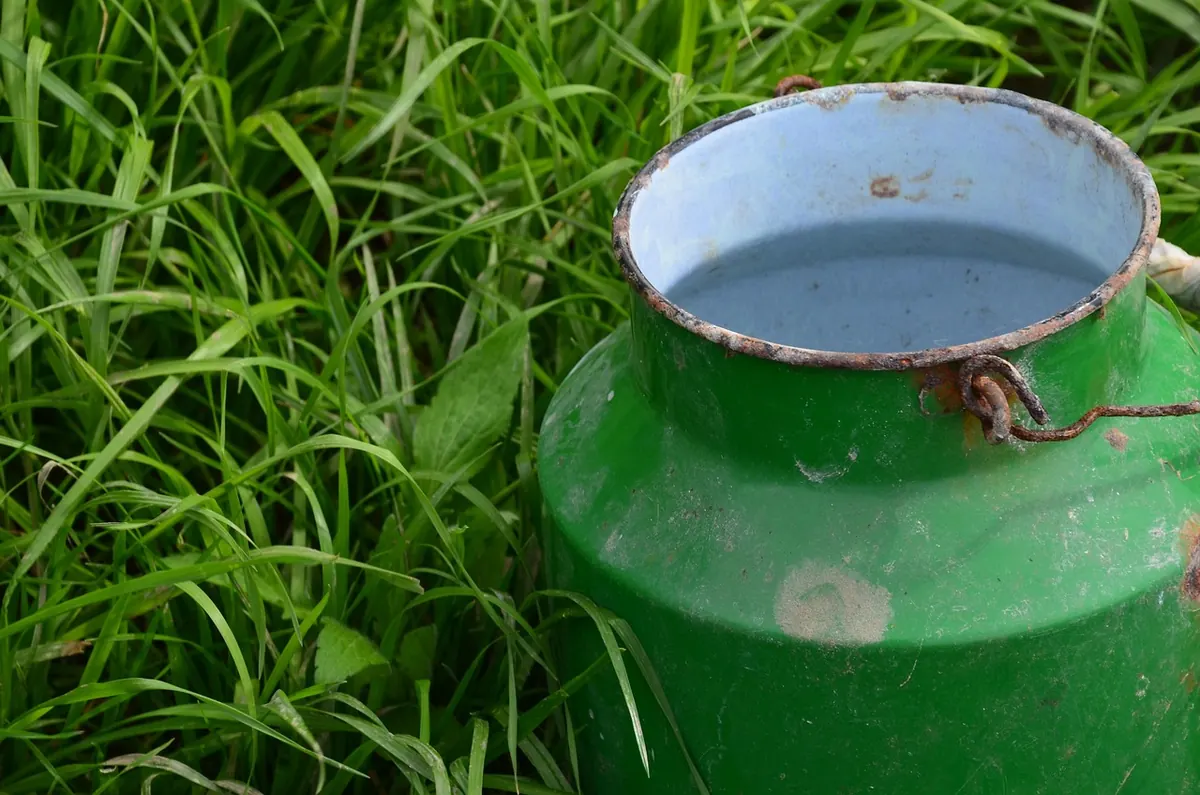
Depth matters more than width. Annual cornfield flowers manage in about 25cm of compost; perennials such as ox-eye daisy, yarrow and field scabious want 30cm or more for roots that stay put over winter. Old half-barrels, trugs, galvanised buckets and builder's buckets all work if they have drainage holes. If they don't, drill them.
- Size: a 30–40cm diameter pot per plant group is a sensible minimum; wider troughs look more like a meadow and dry out more slowly.
- Compost: a peat-free multi-purpose mixed with about a quarter grit or sharp sand, plus a handful of garden loam if you have it. Rich compost grows leaves, not flowers.
- Drainage: crocks or a layer of gravel at the base, and pot feet to lift the container off the paving or lawn so nothing stains or yellows.
- Ground protection: on grass, stand pots on a piece of old compost sack or membrane, and rotate them every few weeks.
Sow a Mix That Flowers This Year
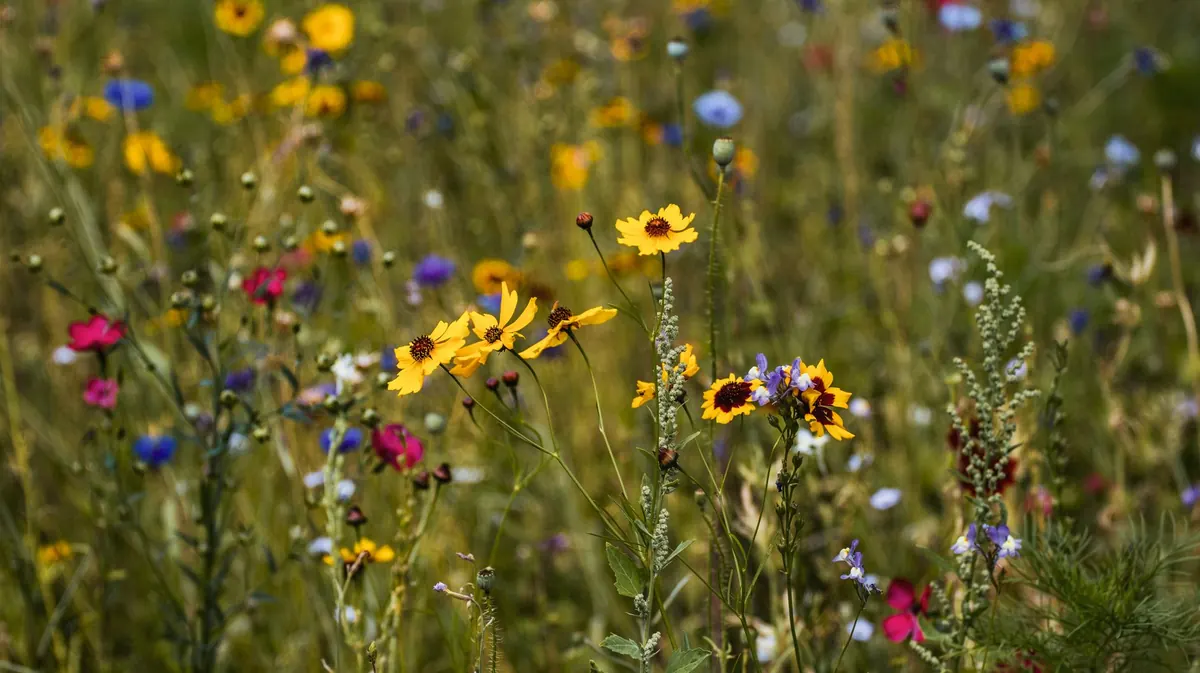
Annual cornfield mixes are the renter's friend because they flower in their first summer from an early spring sowing. Look for cornflower, corn marigold, corn poppy, corn chamomile and scentless mayweed. Scentless mayweed is worth including for early insects, though it self-seeds enthusiastically — easy to pull.
Perennial mixes — ox-eye daisy, birds-foot trefoil, knapweed, selfheal, wild carrot, red clover — usually need a winter before they flower properly, so sow them in late summer or early autumn and expect the best display in the second year. Skip yellow rattle in pots: it parasitises grass roots and needs a grass host to do anything useful.
- Fill the pot to within 3cm of the rim and firm the compost gently.
- Sow thinly — a pinch per pot is plenty. Thick sowing gives you weak, competing seedlings.
- Press the seed into the surface; most wildflower seed needs light to germinate, so barely cover it with a dusting of compost.
- Water with a fine rose and keep the surface damp until seedlings appear, usually within two to three weeks.
- Thin seedlings to roughly 10–15cm apart once they have two sets of leaves. Be ruthless — overcrowding is the usual reason small meadows disappoint.
Looking After It Through the Season
Watering is the main job. Containers dry out fast, and a meadow that wilts in June will not recover its shape. Check the compost with a finger; water thoroughly when it is dry a couple of centimetres down, which in a hot spell can mean daily. Don't feed. Feeding produces soft, floppy growth and fewer flowers.
Deadhead annuals to keep them going; leave some seed heads to ripen so you can collect seed in late summer, and leave the rest standing over winter for birds and overwintering insects. Cut perennials back in late winter or early spring, just before new growth starts. Any self-sown seedlings can be lifted into small pots and grown on — free plants for the next place.
Moving Day: Taking It With You
Short moves are straightforward: strap pots upright in the van, water the day before, and don't travel with them in full sun. For longer moves, take seed and divisions rather than heavy pots. Lift perennials with a decent rootball, shake off loose compost, wrap the roots in damp newspaper and pot them up at the other end. Annuals are not worth moving — collect their seed instead.
If a plant can't come, offer it to the landlord or the next tenant. It costs nothing and it tends to be remembered kindly when the deposit is discussed.
Start Small and Keep It Movable
Two or three decent pots will teach you more than a whole patio of them. Begin with a cornfield annual mix for quick colour, add one or two perennial pots for staying power, and keep everything on feet or saucers so the paving underneath stays as it was. Read your tenancy agreement if you are unsure about what counts as a fixture, and if anything about the property or your deposit is unclear, ask the letting agent in writing before you plant.
The point of a container meadow isn't to recreate a hay meadow. It's to have flowers you can watch, insects you can count, and the option to take the whole thing with you when the tenancy ends. That is a perfectly good meadow — just a portable one.
Photo: _Alicja_ / Pixabay