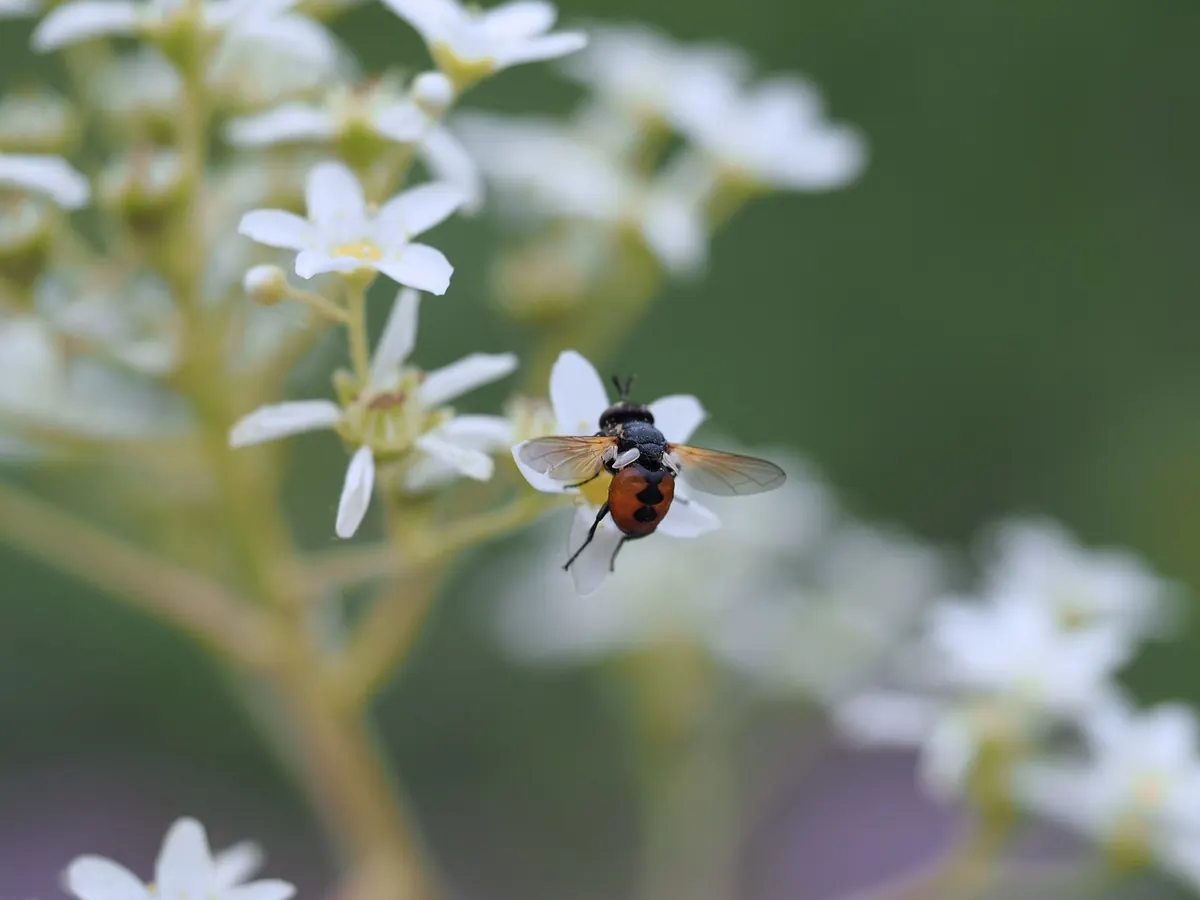
A meadow does not need an acre. Two or three square metres along a sunny fence, or the tired patch of lawn behind the shed that nobody uses, is enough to bring in bees, hoverflies and the first butterflies of the year. The principles are the same as for a field in the Cotswolds: plenty of sun, poor soil, and one good cut in late summer with the clippings carried away. Get those three roughly right and the flowers do most of the work.
Start with the light, not the space
Find the sunniest ground you have. Native wildflowers want at least half a day of direct summer sun, and midday onwards matters most. A south-facing lawn corner, a strip in front of a fence, or a border that already bakes in July will all work. Allow about a metre of clearance from hedges and mature shrubs, whose roots will otherwise take the water before your seedlings get a look in.
If your only available space sits in shade for most of the day, be honest about it. You can make a lovely planted area with foxgloves, red campion and wood anemone, but that is a woodland planting, not a meadow, and it needs a different mowing routine. Before you lift a spade, also check the practicalities: is this where the washing line goes, where the dog tears about, or the route to the compost heap? A meadow in the middle of a thoroughfare will be mud by August. Edges and corners survive far better. If you rent, check your tenancy agreement first — some require the garden to be kept mown.
Decide which kind of meadow you actually want
A perennial meadow — slow, but it lasts
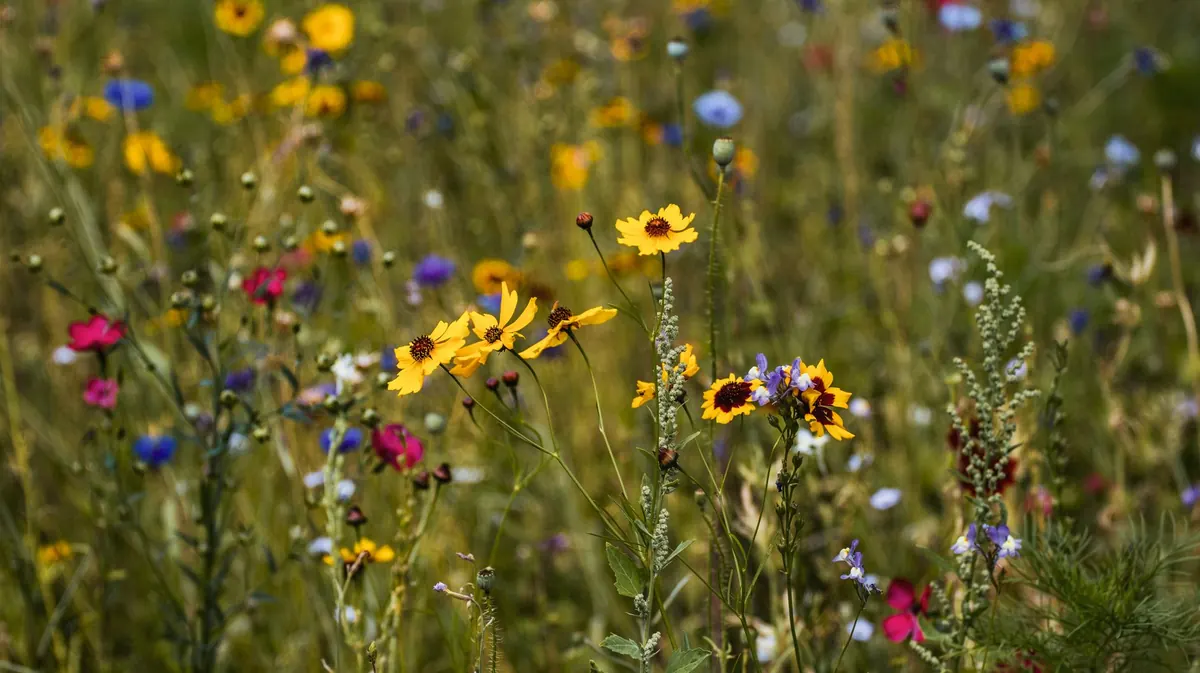
This is the real thing: ox-eye daisy, common knapweed, field scabious, bird's-foot trefoil, selfheal, yarrow and cowslip growing among fine grasses such as crested dogstail and sheep's fescue. Sow in autumn and expect leaves rather than flowers in the first summer. It fills out properly in year two and looks best from year three onwards.
A cornfield annual patch — fast, but temporary
Poppies, cornflower, corn marigold and corncockle sown in spring will flower by July, then largely disappear. They are not a meadow and they will not persist in one, but for a tiny plot they are a cheerful way to have colour while the perennial mix is still finding its feet. Many people run an annual strip along the front edge and leave the rest to perennials.
Prepare the ground properly — this is where most attempts fail
Wildflowers are not fussy about soil type. They are simply beaten by vigorous grasses in rich ground, and a lawn that has been fed and watered for years is rich ground. So the aim is not to feed the soil but to take fertility out of it.
- Mark out the area with string and canes so you can see what you are committing to.
- Remove the existing turf. Skim it in shallow slices with a spade, or hire a turf cutter for anything larger than a few square metres. Stack the turf upside down in a corner; within a year it becomes decent topsoil and a useful habitat pile.
- If you are converting a border that has been mulched and fed, take off the top 5–10cm of soil as well. It sounds drastic, but on a small patch it is an afternoon's work, and the soil you remove can go on the veg beds.
- On poor, weed-free ground you can smother instead: cover with black polythene for a growing season to kill what is there. Bear in mind this removes weeds but leaves fertility untouched.
- Rake level and firm the surface lightly with your boots or the back of a rake. You want a crumbly, settled surface, not a deep, loose tilth.
- Do not add compost, manure, fertiliser or bagged topsoil. This is the single most common mistake.
Choosing seed and plants
Buy British native seed and look for the words "native origin" or "UK provenance" on the packet, along with a species list you can actually read. Avoid mixes containing perennial ryegrass, white clover or anything described as quick to establish; those are agricultural or amenity mixes and they will outcompete the flowers. A typical meadow mix is around 80 per cent grass and 20 per cent wildflower by weight, which looks grass-heavy in the bag but is normal, because wildflower seed is small and light.
For a border or a very small patch, plug plants are quicker and far more reliable than seed. Autumn and spring are both good planting times, at roughly five to nine plugs per square metre. Yellow rattle is worth including in either case: this native annual parasitises grasses from the roots and steadily opens up space for flowers. It needs a cold spell to germinate, so autumn sowing is essential, and it can take a season or two to show itself.
Sowing, step by step
Early September to mid-October is the best window — the soil is still warm, rain does the watering, and seeds that need cold get it. March to mid-April is the fallback, but you will spend the first summer with a hose.
- Check the sowing rate on the packet, usually somewhere between 1g and 5g per square metre. For a 3m × 2m patch that is a very small handful in total. Under-sow rather than over-sow; thick sowing gives a dense, floppy, weak stand.
- Split the seed into two equal batches and mix each with dry sand or dry soil so you can see where it lands.
- Sow the first batch walking in one direction, the second walking at right angles to it.
- Press the seed into contact with the soil by walking over the patch in small, shuffling steps, or roll it. Do not rake it in deeply.
- Water gently if the weather stays dry for a fortnight. After that, leave it alone.
- Put a label or a few short canes in. Come April the patch will look like nothing much, and somebody in the household will mow it.
The first year: mowing, weeding and what to expect
Expect a green fuzz rather than a flower show. Cornfield annuals will give you colour in the first July; the perennials are mostly building roots. Annual weeds such as chickweed, groundsel and fat hen will appear, and the answer is usually to mow them off at 5–7cm in late May or early June. That knocks the weeds back without harming the young meadow plants beneath.
Docks, thistles and nettles need digging out individually before they set seed. Hand tools are the practical answer in a new meadow; if you resort to a spot weedkiller on a deep-rooted dock, keep it well away from the plants you want.
The mowing routine from here barely changes:
- Late July to mid-August: the main cut. Strim or mow to 5–10cm — never scalp it. Leave the clippings lying for two to four days so seed drops, then rake them off and compost them. Removing them is the point: that is how nutrients leave the system.
- September or October: a second cut to about 5cm, again clearing the clippings. This keeps grasses in check through winter.
- Over winter: leave a small corner uncut if you like. Seed heads feed birds and hollow stems shelter insects, though it will look untidy until March.
- Never mow it weekly like a lawn between cuts. Regular close mowing selects for exactly the grasses you are trying to suppress.
From year two, repeat the same rhythm. If grass still dominates, scatter more yellow rattle seed each September. Flowering is usually best between years three and five, and there is often a quiet fortnight in late June when the ox-eye daisies have finished and the knapweed has not yet started.
Living with a small meadow
An edged meadow looks deliberate; an unedged one looks abandoned. Keep a mown path to the shed, run shears along the boundary once a month, and the patch will read as a feature rather than neglect. Two cuts a year and a morning's raking is genuinely all the maintenance it needs.